
AFRICA’S INFRASTRUCTURE FINANCING: KEY TRENDS AND FINDINGS (2021–2023)
Infrastructure financing commitments in Africa recovered over 2021–2023, averaging US$92.7 billion annually and reaching US$96.7 billion in 2023. Yet the increase in commitments did not close the gap between investment and infrastructure needs.
Financing commitments recovered
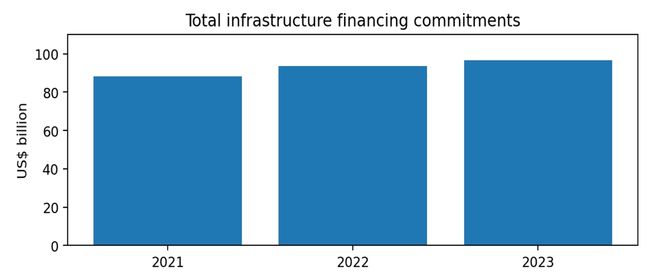
Total recorded commitments increased from US$88.1 billion in 2021 to US$93.5 billion in 2022 and US$96.7 billion in 2023. These figures measure financing committed, not necessarily amounts disbursed or infrastructure delivered.
Where financing was directed
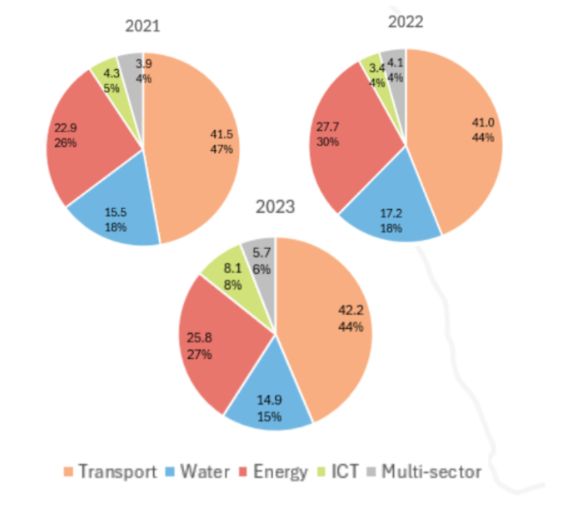
Transport attracted the largest amount of infrastructure financing in 2023 (US$42.2 billion), followed by energy (US$25.8 billion), water and sanitation (US$14.9 billion), and ICT (US$8.1 billion). The distribution illustrates the continued prominence of connectivity and power infrastructure in recorded commitments.
Regional patterns differed
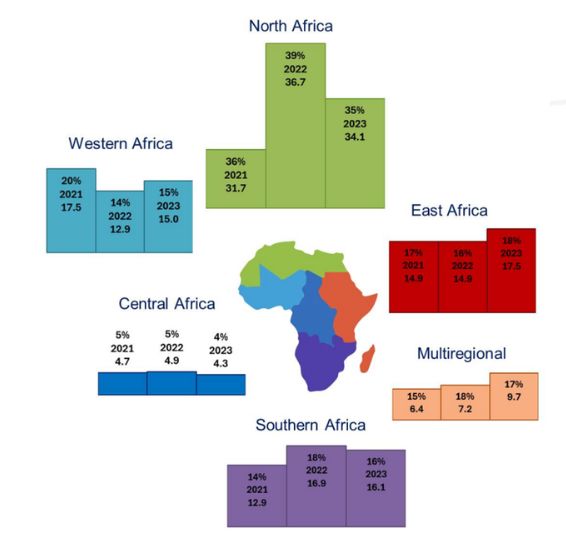
North Africa received the largest regional allocation during the period, influenced particularly by Egypt’s national infrastructure budget. Regional totals should be interpreted alongside differences in national budget reporting and the availability of project-level information.
The financing gap persisted
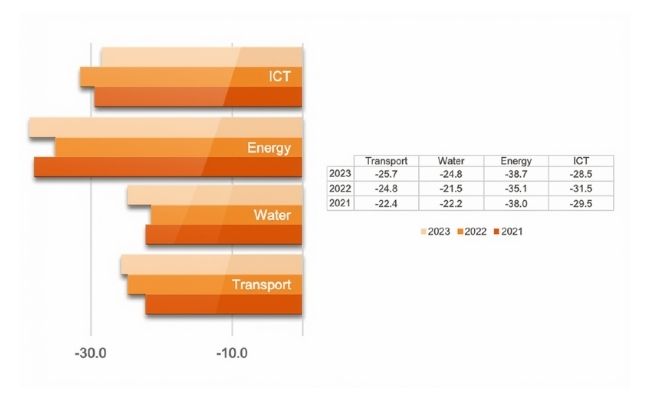
The estimated annual financing gap across transport, energy, water and sanitation, and ICT increased from approximately US$112 billion in 2021 to US$118 billion in 2023. Rising commitments therefore did not keep pace with estimated needs. The companion pages examine which public and private sources provided financing.