
Water

Water Financing Needs and Trends

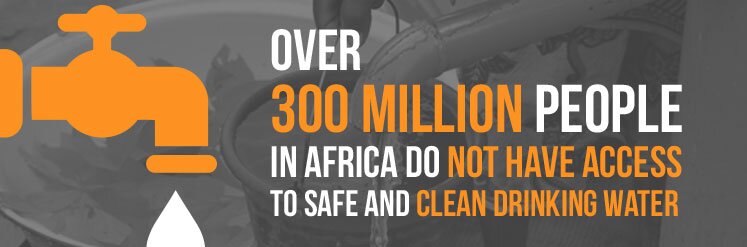
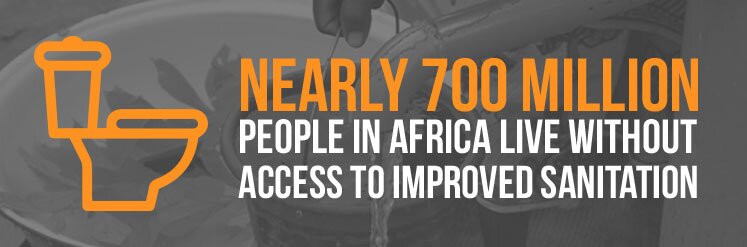
While Sub-Saharan Africa reached the Millennium Development Goal (MDG) for access to water 5 years ahead of target, safe drinking water will remain a problem and the sanitation targets will not be met. Coverage in urban areas is also declining as utilities struggle to keep pace with population growth.

For many countries, the costs linked to continual expansion, maintenance and improvements in water access remain not only high, but prohibitive.

Spending on the water sector today is US$3.6 billion per year, one-quarter of what is required.  However, approximately US$2.7 billion available to the sector is currently being wasted due to inefficiencies.

Under-pricing of services is an important inefficiency.  Average water tariffs are about US$0.67 per cubic meter, below the cost-recovery threshold of just over US$1.00 per cubic meter.  By under-pricing water, the sector forgoes at least $1.8 billion per year in revenues.

The operational inefficiencies of water utilities cost the region US$0.9 billion per year and impede service expansion.  Institutional reforms of legal and regulatory frameworks hold the key to improving performance.  Private participation, particularly lease contracts, has significantly affected utility performance, but state-owned utilities will remain the central actors, and greater efforts are needed to improve their governance frameworks.

Even if all these inefficiencies could be eliminated, the overall financing gap for the water sector would still be US$7.8 billion per year, or 1.2% of GDP.

For the majority that does not enjoy access to a piped-water connection, greater thought needs to be given to how stand-posts can become a more effective part of urban water supplies.  In rural areas, the big challenge, in addition to continuing to expand access, is the high breakdown rate from lack of maintenance, which threatens the sustainability of what has already been achieved. (Data source: AICD).

ICA Water Platform

The ICA Strategic Business Plan (2010-2012) encouraged greater involvement of ICA members in sector-related activities. It proposed ‘sector ownership’, whereby an ICA member could champion assignments and provide leadership, benefitting from ICA’s 'convening power' and base within an African institution.

The ICA Water Platform (WP) was established in 2011 and is championed by Germany, which provides financial support and an infrastructure expert to supervise implementation of WP activities. The WP facilitates active cooperation and matchmaking between ICA Members, key African stakeholders and the private sector, including regular dialogue leading to joint investment activities.

ICA’s WP is a pro-active, results-oriented initiative that encompasses all aspects of water infrastructure development in Africa, from water provision (e.g. potable water supply, sanitation, irrigation) to water resource management (e.g. storage, dams) and climate change (e.g. adaptation measures).

The WP complements and adds value to the work of the existing initiatives in the sector.

Water Platform Objectives

  • Scale-up finance for sustainable water infrastructure in Africa from public, private and public-private sources.
  • Identify and facilitate bankable water-related projects, with a focus on regional projects.
  • Facilitate dialogue on financing between African stakeholders, development partners and the private sector to promote best practices, remove bottlenecks and facilitate regional Water Infrastructure Programs and member initiatives.
  • Facilitate greater co-operation (in alignment with African priorities, e.g. African Water Vision 2025, Sharm-El Sheik Declaration) among ICA members, relevant initiatives and partnerships, and other important sources of water infrastructure finance, via regular Water Platform Meetings, support of the AMCOW work plan and matchmaking activities.

Investment Challenges

ICA supports the African Infrastructure Country Diagnostic (AICD), a comprehensive World Bank study to assess the magnitude of Africa’s infrastructure needs. The 2009 AICD Flagship report Africa's Infrastructure: A Time for Transformation revealed many important challenges for African water infrastructure, including climate change and the implications of energy, food and financial crises.

Challenges include:

  • Existing funding gap that hinders achievement of Water & Sanitation MDGs.
  • Institutional, political and regulatory barriers to water infrastructure implementation.
  • Need for cooperation amongst riparian states and affected sectors for efficient, integrated management of national and transboundary water resources
  • Increase in regional hydrological variability due to climate change, and need for adaptation and climate-resilient approaches.

Integrated Water Resource Management remains a challenge at the national level and gains complexity at regional level. Implementation is slow despite capacity building and technical assistance programs to develop strategies and remove institutional, political and regulatory hurdles. The lack of bankable projects and concrete investment plans, along with inadequate financing resources, all form major bottlenecks to water infrastructure development.

Financial Support by ICA Members

Water sector investment is of increasing importance to ICA members (see 2010 ICA Annual Report). While commitments declined from 2008-2009, ICA member assistance to the water sector rose by 72% to US$3.8bn in 2010. Support increased in all African regions, with slight increases in West and Central Africa, while support doubled in the North, East and Southern Africa regions (including South Africa). The top three donors for water projects in 2010 were the World Bank (29.8%), Japan (16.8%) and Germany (13.6%).


ICA Member funding to water sector by African region, 2006-2010, in billions $US. 


Source ICA. For the latest figures on all sectors, consult the 2010 ICA Annual Report.

DOWNLOAD the two-page flyer presenting the ICA Water Platform.

FIRST ICA WATER PLATFORM MEETING
8-9 March 2012 in Frankfurt, Germany

Original announcement  |  Presentations from the meeting | Post-event press release

Web design agency - Liquid Light