
ICT Financing Needs and Trends
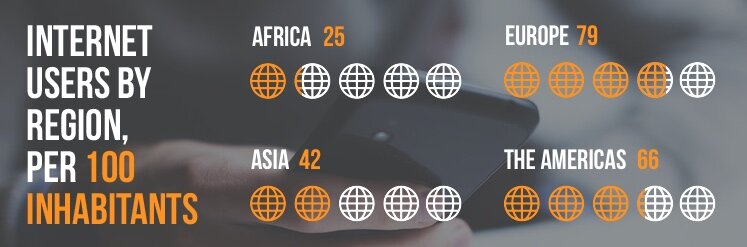
Three-quarters of Africa’s population are offline
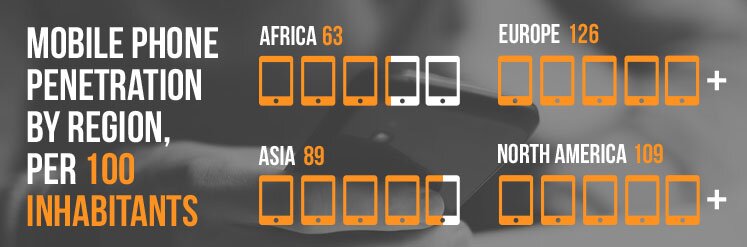
Africa has witnessed significant growth in Information and Communications Technology (ICT) since the start of the millennium, particularly in mobile telephony. But while mobile phone penetration in Africa now stands at over 60%, the continent lags well behind other developing regions in internet access and usage.
The ICT Challenge
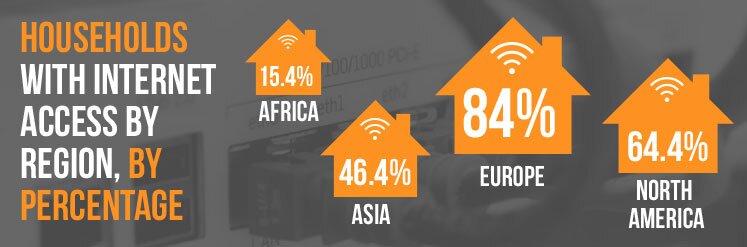
ICTs are transformational drivers of both economic and social progress. They have the potential to make Africa a better place, and to greatly improve the lives of Africa’s people. The growth of mobile telephony across Africa has been a notable success story, leading to improvements in the lives of Africa’s people, both urban and rural. However, 75% of the population of Africa are still offline, denied access to the wealth and breadth of knowledge, information and services that the internet can bring. Access to the internet can play an important role, advancing skills and capabilities, and increasing awareness, but only 15% of households in Africa have internet access.
Addressing the ICT Challenge
Mobile telephony is already widely available across Africa, in both urban and rural areas, and it is relatively affordable to most Africans. To ensure internet connectivity is similarly widespread – and affordable – will require substantial investment from the public and private sectors. However, to date the flows of private investment into ICT in Africa have benefitted only a small number of countries, where the required infrastructure is already well-developed. An enabling environment needs to be introduced and managed for the private sector to participate in the equitable delivery of services to all of Africa’s people, irrespective of age, gender, location or social and economic position.

Report - 2016
The ICA’s annual publication about infrastructure financing trends (the seventh in the series) identifies how resources are being mobilised to make an impact on Africa’s infrastructure development.

Report - 2016
This background paper was commissioned by the Infrastructure Consortium for Africa (ICA) and the Japan International Cooperation Agency (JICA) in preparation for the Annual Meeting of the Infrastructure Consortium for Africa (ICA), which took place in Abidjan, Cote d’Ivoire, on 21 and 22 November 2016.